Estimated reading time: 6 minutes
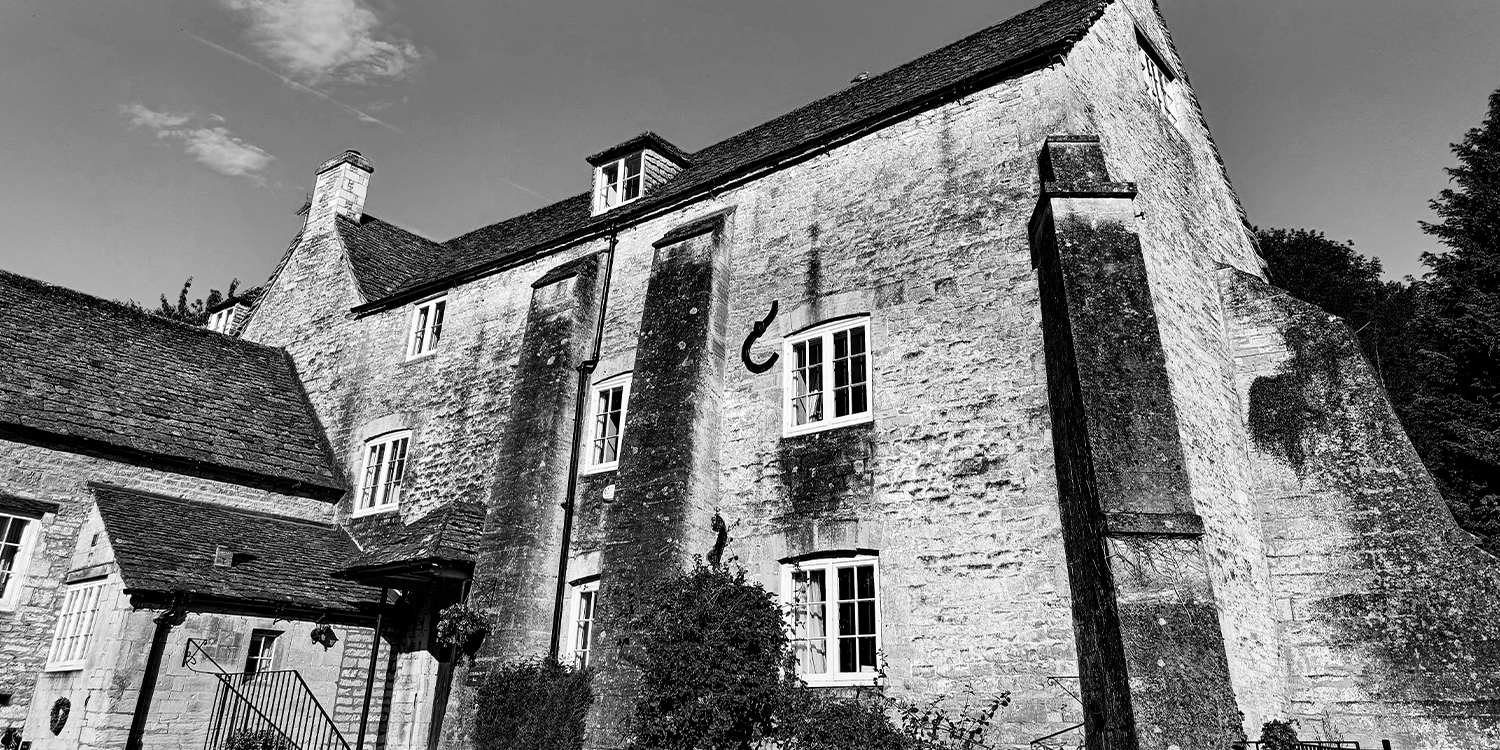
Anyone familiar with the Cotswolds knows Bibury. From the iconic Arlington Row to the beautiful River Coln running through the village, it is a location that feels completely untouched by time. Yet, the Bibury we know today wouldn’t exist without Arlington Mill. For centuries, this grand, historic mill was the economic heartbeat of the area, driving the local industry and fundamentally shaping the village’s history.
The Origins of Arlington Mill
Arlington Mill dates back to 1086, recorded in the Domesday Book. While it later operated as a corn mill grinding local grain into flour, its medieval origins were rooted in the Cotswold wool trade. Powered by the River Coln, it was used for fulling, a vital process that transformed raw wool into high-quality textiles.
What is Fulling?
Woven cloth from the mill underwent a rigorous two-step treatment.
First came scouring, which cleaned the material. Raw wool naturally contains heavy grease and dirt that water alone cannot cut through, so medieval fullers used stale urine to break down the grease. In later centuries, this was replaced by fuller’s earth, a natural, absorbent clay mined nearby.
Once cleaned, the milling process began. The wet fabric was placed into large troughs where massive, water-powered wooden hammers repeatedly beat and pounded the cloth. This intense mechanical pressure and friction caused the wool fibres to shrink, interlock, and felt.
The final result was a densely matted, durable, and water-resistant fabric. It was the ideal material for heavy outerwear, blankets, and uniforms that needed to offer essential warmth and insulation against the elements.
Arlington Row
Why There Would Be No Arlington Row Without Arlington Mill
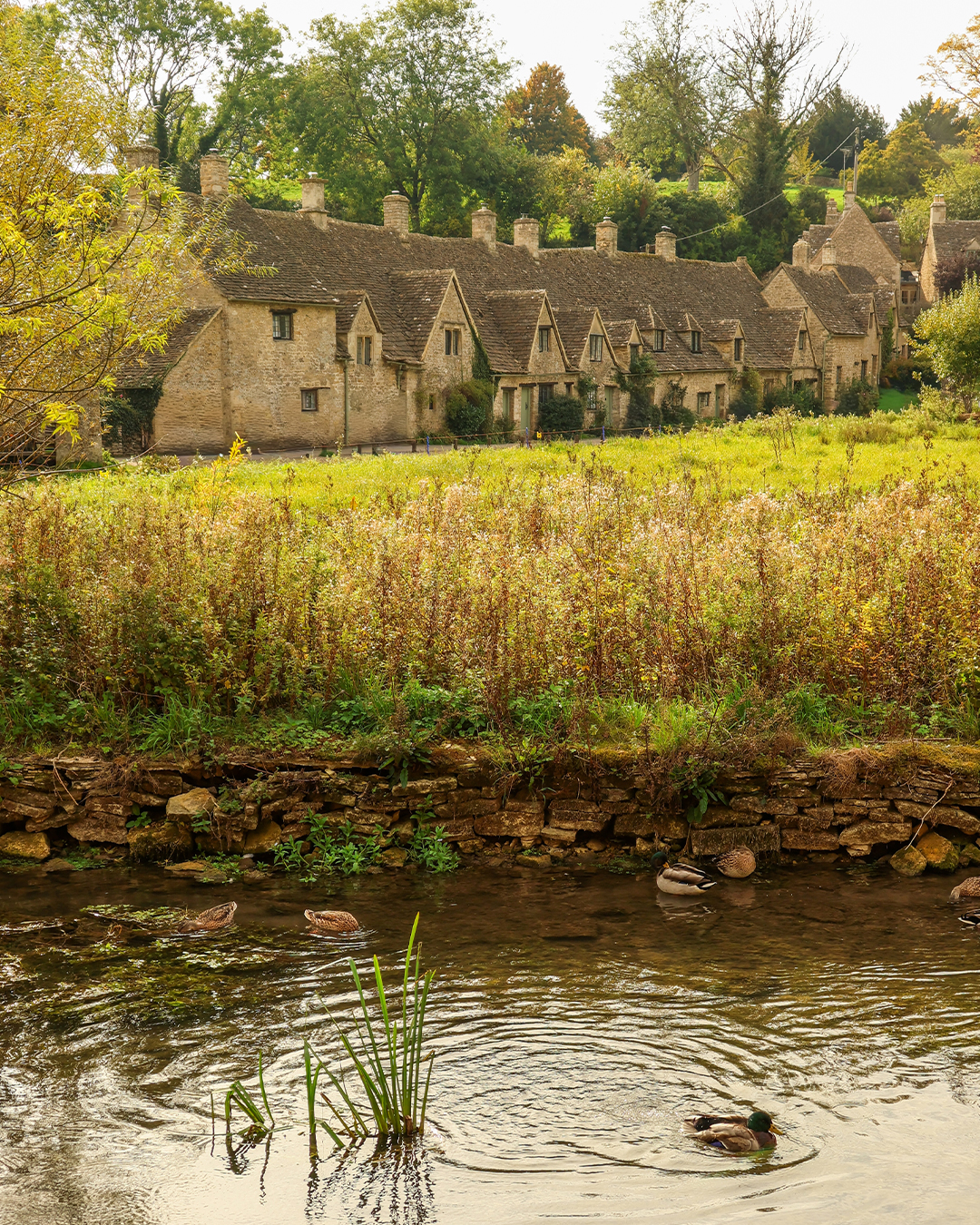
Arlington Row is widely known as one of the most beautiful spots in the Cotswolds, if not the world, attracting thousands of visitors each year to capture its iconic medieval look. Yet, this postcard-perfect setting simply wouldn’t exist without Arlington Mill.
The cottages were originally constructed in 1380, not as homes, but as wool stores for the mill. Building them here gave the workers immediate access to the site, sparing them from transporting heavy sacks of raw fleece over long distances. As the local textile industry evolved in the late 17th century, this row of buildings was cleverly divided and converted into a row of houses for weavers.
Rack Isle
In Between Arlington Mill and Arlington Row
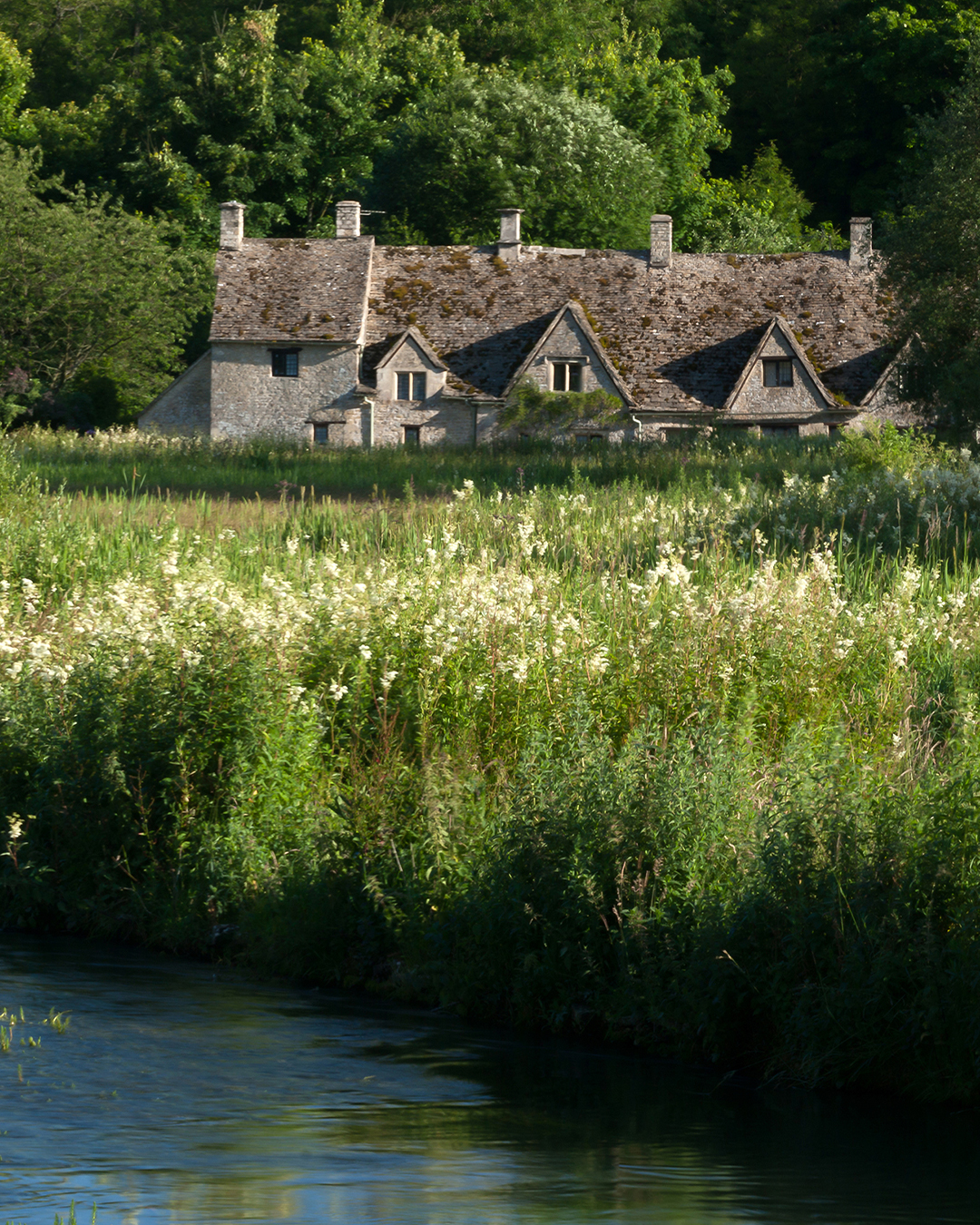
The walk from Arlington Mill to Arlington Row takes you past Rack Isle, a tranquil water meadow surrounded by the River Coln on one side and the old mill stream on the other.
Centuries ago, it contributed directly to the local textile trade. The island takes its name from the large wooden frames, or racks, where weavers from Arlington Row would hang heavy, wet woollen cloth to dry after it had been washed.
Fun Fact: The phrase “on tenterhooks” comes from the 14th-century wool industry. Heavy cloth was stretched tightly on wooden frames (“tenters”) using sharp hooks to dry without shrinking. The intense tension of the fabric became the perfect metaphor for feeling anxious or full of suspense.
Today, this marshy island is a completely protected ecosystem and a closed sanctuary for rare British wildlife, including water voles, kingfishers, and dragonflies.
The Evolution of Arlington Mill
From Wool to Grain
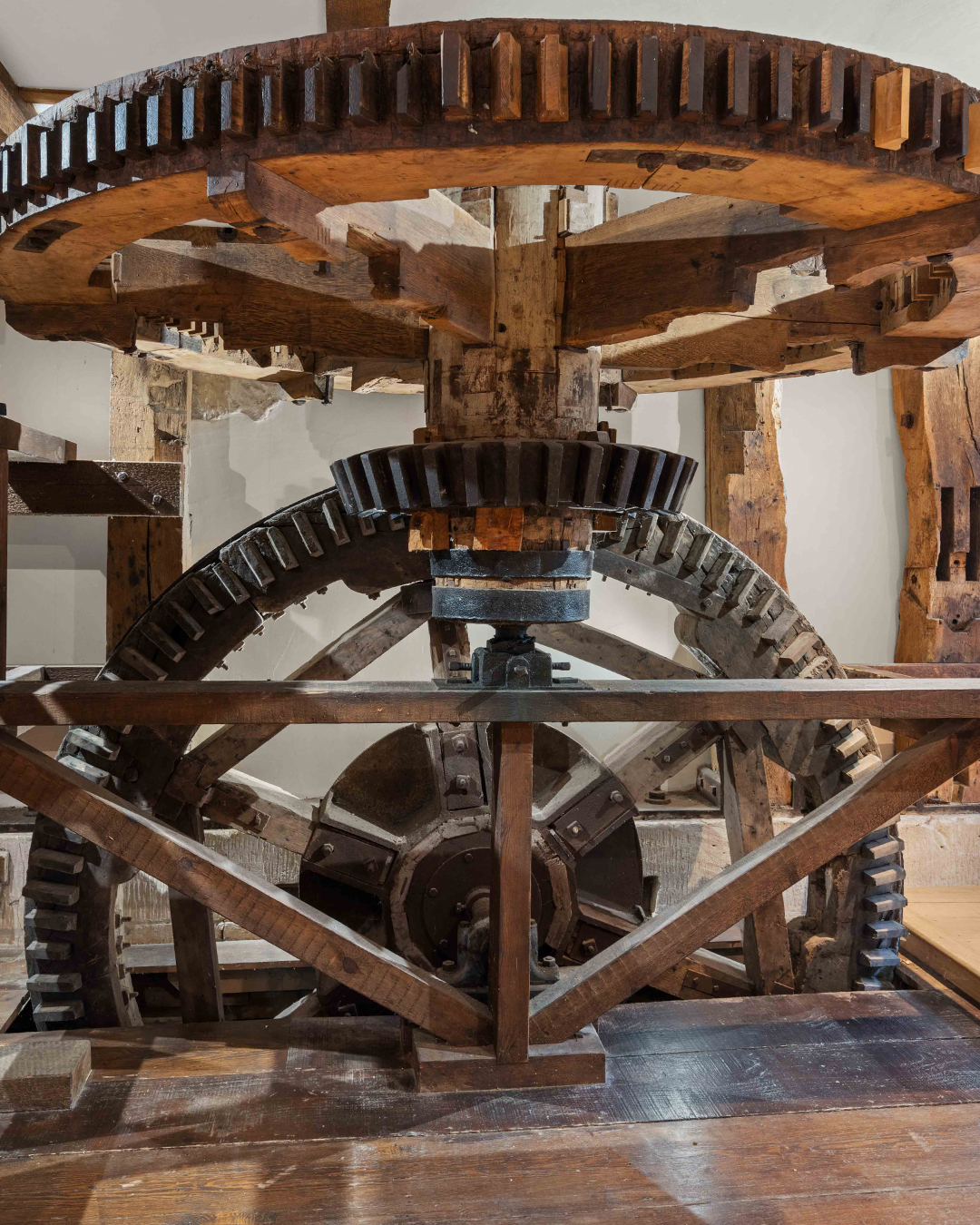
By the 1800s, as the global demand for woollen cloth declined, Arlington Mill adapted by shifting its operations to corn milling. Local farmers brought their harvests of wheat, barley, and corn to the site, where the waterwheel turned massive, heavy circular grindstones. These stones processed the crops into fine flour for baking and coarse meal for animal feed, providing a vital service that sustained the local agricultural economy.
As technology progressed, a steam engine was installed in 1869 to keep the mill operating year-round. This investment was essential because the River Coln was prone to drying up during hot summers and freezing solid in the winter, which previously brought production to a standstill.
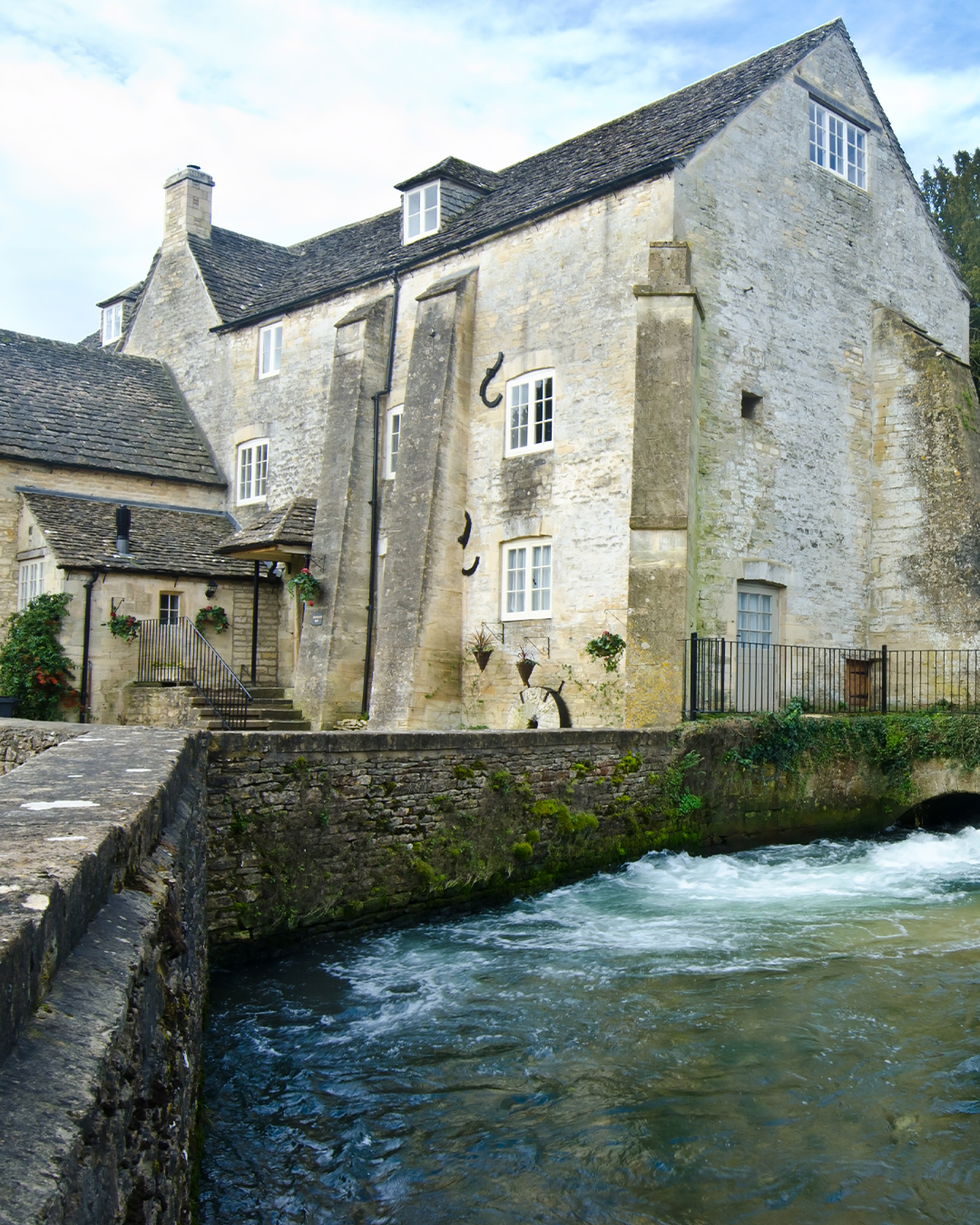
To withstand the shock and vibration generated by the new steam engine, internal iron columns were installed to prevent the historic structure from cracking. On the outside of the building, the massive stone buttresses you can see today were added to help support the walls against the power of the machinery. Behind the mill, a brick engine room and boiler house were built to house the equipment, foundations that were rediscovered by historians in the 1960s.
This steam-powered setup ran for just under 50 years. By the early 1900s, traditional water and steam mills simply could not compete with modern industrial steel rollers, and Arlington Mill finally stopped commercial milling in 1904.
The local Bartlett family continued to grind small batches of grain using the original waterwheel, but they simply could not compete with the massive roller mills at Britain’s shipping ports.
For decades, the building was used primarily for agricultural storage, though its dramatic architecture later caught the eye of avant-garde artists.
From Museum to Holiday Let
In June 1966, the mill briefly became a focal point for the International Concrete Poetry and Kinetic Art movement, hosting an experimental exhibition called Arlington-Une that filled the space with sound poetry and modern sculptures.
Following David Verey’s passing, the museum closed its doors in the mid-1990s and the building was converted into a private residence and luxury holiday home.
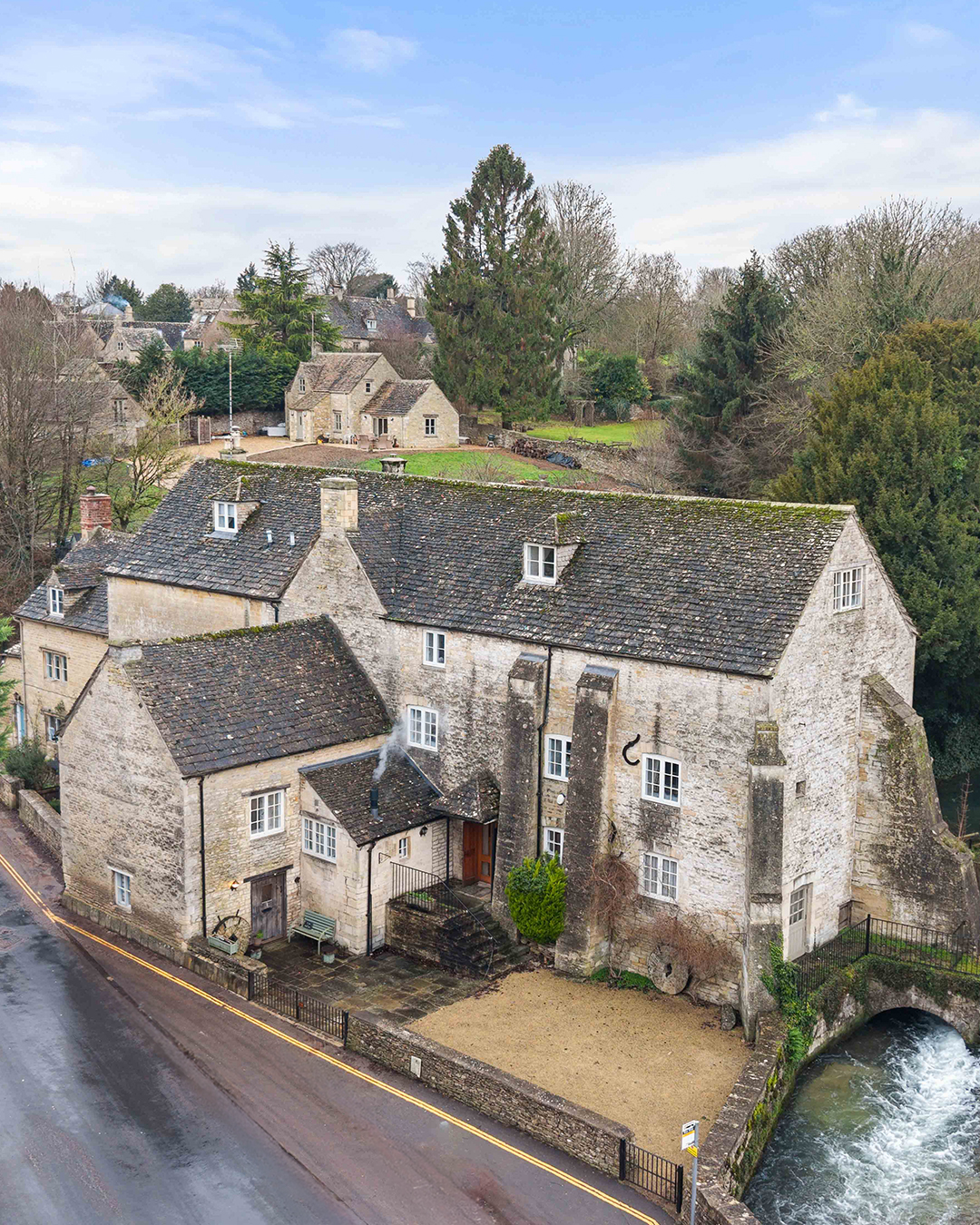
Today, a visit to Arlington Mill is still nothing short of breathtaking. The original wheel has been superbly preserved, with the mechanisms stretching across three expansive floors right up to the ceiling. From the top floor, you can enjoy exceptional, private views over the trout farm, The Swan, and the rolling Cotswold hills fading into the distance.
It is a rare privilege to stay amongst such profound history, and you are just a short few steps from the iconic Arlington Row. Here, you can truly immerse yourself in the heritage of the village and walk the very paths trodden by locals centuries ago.
Stay in Bolthole Retreats ‘Bibury Mill’ which consist of the full three floors of Arlington Mill, along with ‘The Snug’ which sleeps two in this lovely corner of the structure. Both ‘Arlington Mill’ and ‘The Snug’ are available also to book for a slightly smaller group or a romantic getaway for two.
Stay at Arlington Mill?


 A historic mill house and a cosy cottage set in the beautiful Cotswold village of Bibury
-
 Discover the history of Arlington Mill, just a stone’s throw from beautifully picturesque Arlington Row.
 -
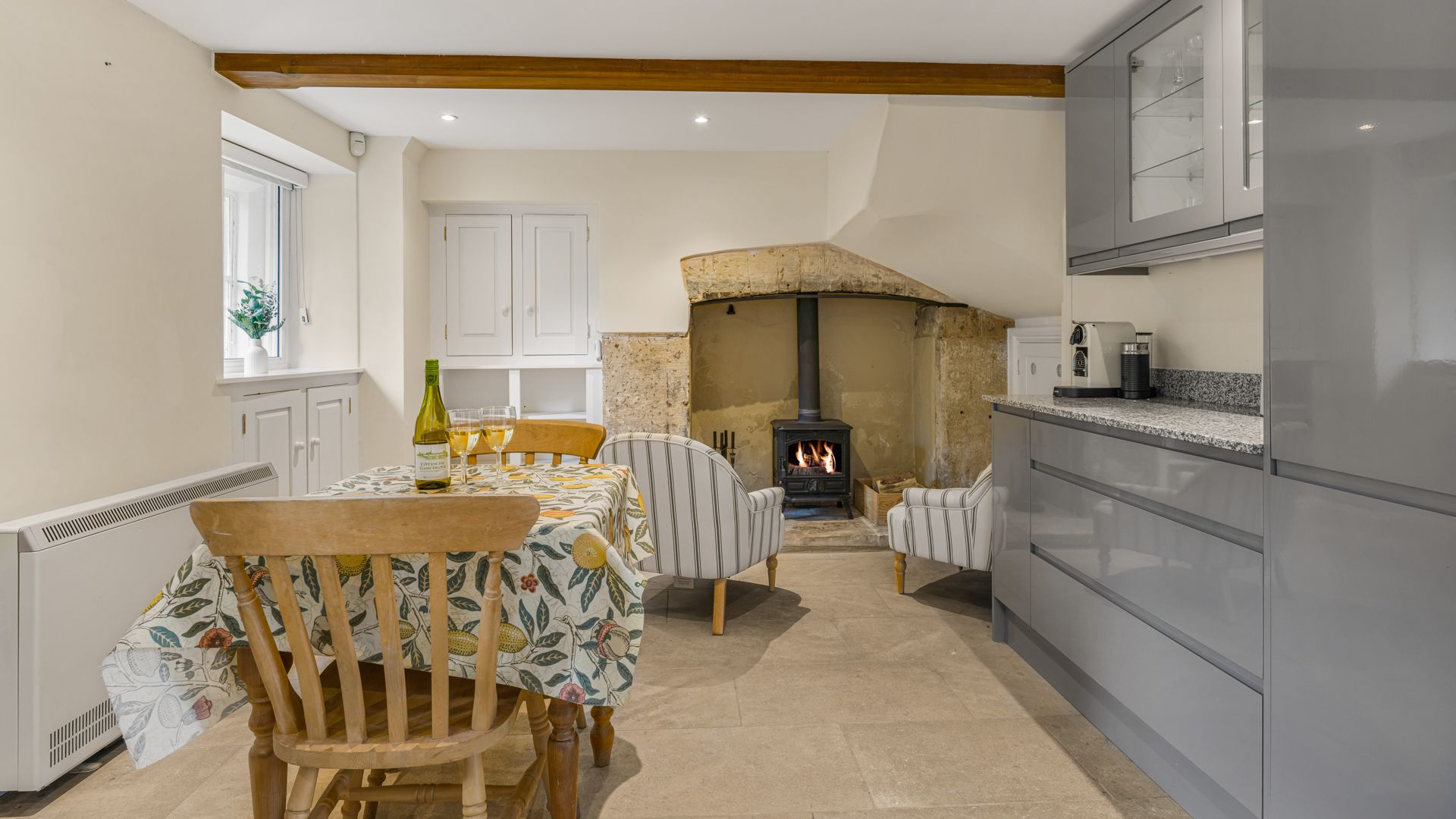 Romantic retreat for two on the site of a historic converted mill in beautiful Bibury.