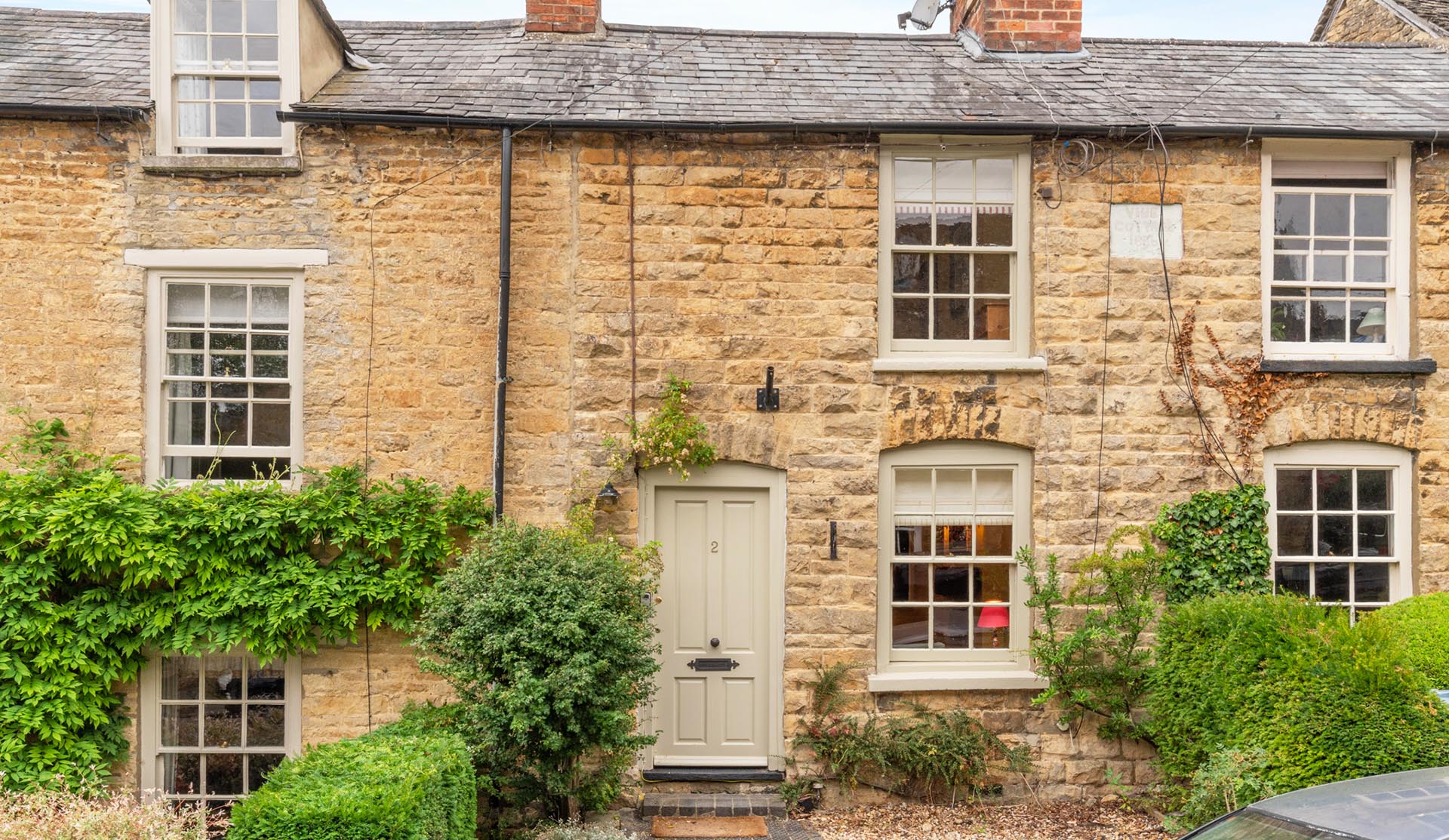
Thinking about turning a property into a holiday let? Good news: holiday letting can still be a really rewarding investment. But the tax picture has shifted quite a bit over the last couple of years, and a few simple rules decide whether your let pays business rates or council tax. That can make a big difference to your running costs.
Here’s a plain-English guide to where things stand this autumn, what’s changed, what might change next, and how to stay on the right side of the rules from day one.
Business rates or council tax? The 140/70 test
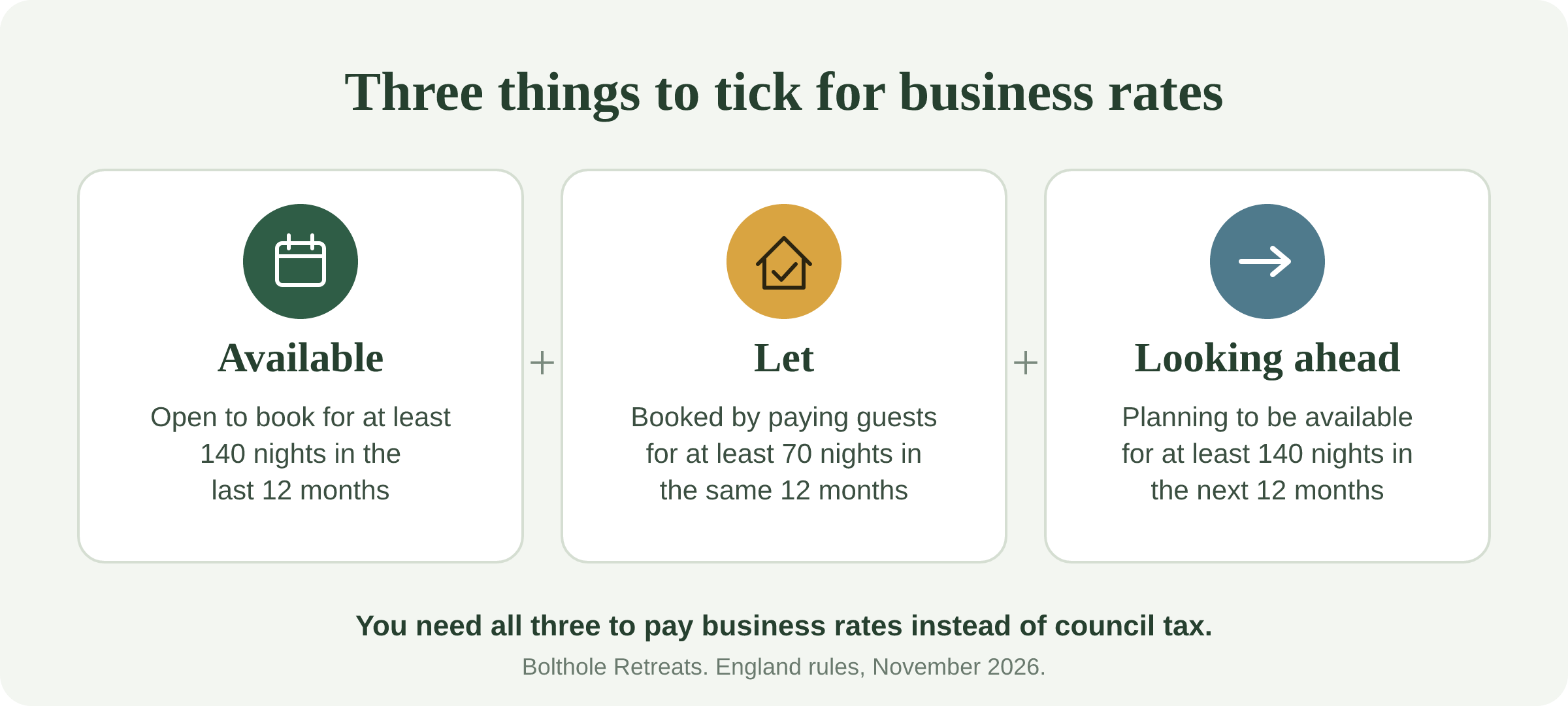
In England, your holiday let is charged business rates instead of council tax only if it passes what’s known as the 140/70 test. It’s been in place since April 2023. To pass, you need to tick all three boxes:
- 1. Available: your property was available to let for at least 140 nights over the last 12 months.
- 2. Let: it was actually let to paying guests for at least 70 nights in that same period.
- 3. Looking ahead: you plan to make it available for at least 140 nights over the next 12 months.
Some nights don’t count towards the test:
- nights when you, your family or friends stay (including discounted stays)
- nights when the property is closed for repairs or refurbishment
- future bookings that haven’t happened yet
- very long stays by the same guest (usually over 28 nights)
That’s why the first year needs a little planning. The Valuation Office Agency looks at what actually happened, not what you hoped would happen.
What changed in July 2026?
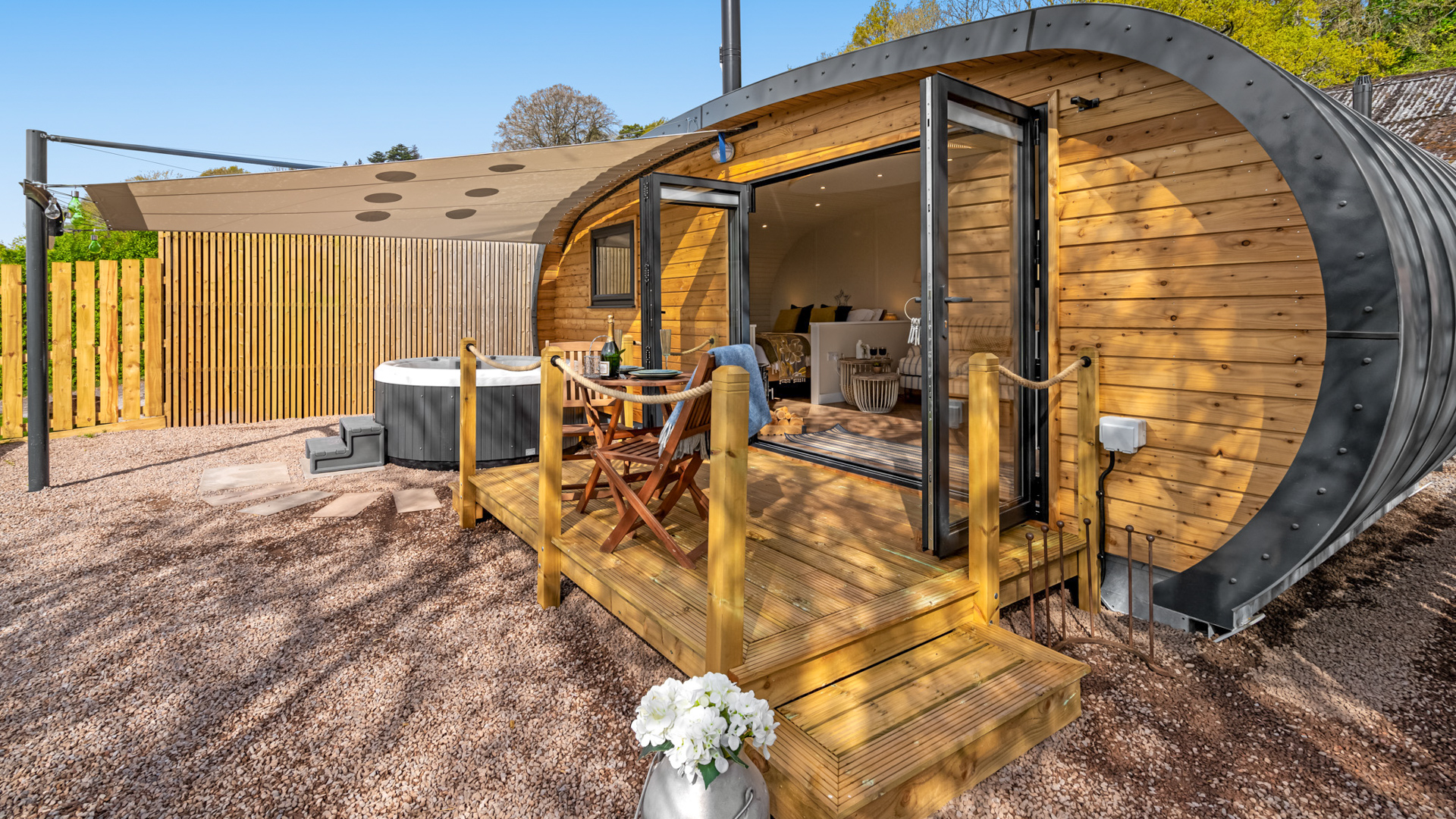
(The Nook, Chepstow, Bolthole Retreats)
From 24 July 2026, two new exceptions sit alongside the 140/70 test in England. The standard test itself hasn’t changed.
- Five or more lets on one site. If you own five or more self-catering units that are part of the same property, they can qualify for business rates without the 140/70 look-back tests. None of the units can be anyone’s main home, and you need to plan to make each one available for at least 140 days over the next 12 months.
- Lets next to another business. If your holiday let is run alongside another business on the same land by the same operator, such as a cottage next to a pub, it can qualify in the same forward-looking way.
If you’re buying a single cottage or flat, nothing changes for you, and the 140/70 test still applies. The new rules matter most for holiday parks, farm diversification projects, estates and anyone building a small cluster of units.
Could the rules change again?
Possibly. The Treasury has reportedly been looking at how short-term lets are taxed, including whether some holiday lets should be treated as second homes for local tax purposes. The Budget on 28 October 2026 didn’t change how holiday lets are classified, so the 140/70 test still stands for now. The review hasn’t reported yet though, so changes could still follow.
Here are some of the ideas being talked about in the industry:
- a higher letting target than the current 70 nights
- tougher proof that your property was available and let
- a closer look at Small Business Rate Relief, which currently gives 100% relief to a single property with a rateable value of £12,000 or less
None of these is law. It’s still worth knowing about them, because they could affect how you plan your bookings and keep your records.
Why it matters: council tax and second-home premiums
If your let doesn’t pass the test, it goes back into council tax. In many holiday hotspots, that can mean paying double. Since 1 April 2025, councils in England can add a premium of up to 100% to furnished homes that aren’t anyone’s main home.
By contrast, a single holiday let on business rates with a rateable value of £12,000 or less can often claim Small Business Rate Relief and pay little or nothing. So falling a few nights short of the 70-night mark could turn a very small bill into a full council tax bill, doubled. Rules and premiums vary from council to council, so it’s worth checking the area you’re buying in.
The 2026 Budget also raised the Small Business Rate Relief limits in England to £18,000 (full relief) and £21,000 (partial relief) from April 2027. This only applies to qualifying retail, hospitality and leisure properties. Whether self-catering lets count depends on the detailed rules, so please check before you rely on it.
Income tax: the end of the special holiday let rules
The special Furnished Holiday Lettings (FHL) tax rules ended in April 2025, so holiday lets are now taxed much like any other rental property. In practice, that means:
- you get basic-rate tax relief only on mortgage interest, just like with a long-term let
- you can’t make new claims for furniture and fittings
- the capital gains tax reliefs that came with the FHL rules no longer apply to new lets
- your letting income no longer counts as earnings for pension contributions
There’s one more change to know about. From April 2027, income tax on property income, which now includes holiday lets, rises by 2 percentage points to 24% (basic rate), 44% (higher rate) and 49% (additional rate) in England, Wales and Northern Ireland.
The October 2026 Budget didn’t bring the old FHL rules back, and there’s no sign of that happening. Be wary of headlines that suggest otherwise. Any future change is more likely to affect property tax in general than to revive the old scheme. It’s safest to plan your figures around today’s rules rather than hoped-for ones.
A checklist for new owners
- 1. Check your council’s position on second-home premiums before you buy.
- 2. Plan your first year, so your home is available for at least 140 nights and realistically let for 70 or more.
- 3. Go easy on personal use in the early months, because family stays don’t count towards the test.
- 4. Keep good records of availability, bookings, invoices and marketing. You’ll need them to apply, and to show you still qualify.
- 5. Apply for business rates with the Valuation Office Agency once you pass the test, then check whether Small Business Rate Relief applies to you.
- 6. Run your numbers on today’s tax rules, without the old FHL reliefs and with the higher property income tax rates due from April 2027, and talk to an accountant about your own situation.
- 7. Building several units, or adding lets to an existing business? Ask about the July 2026 exceptions, which might help you qualify sooner.
How Bolthole Retreats can help
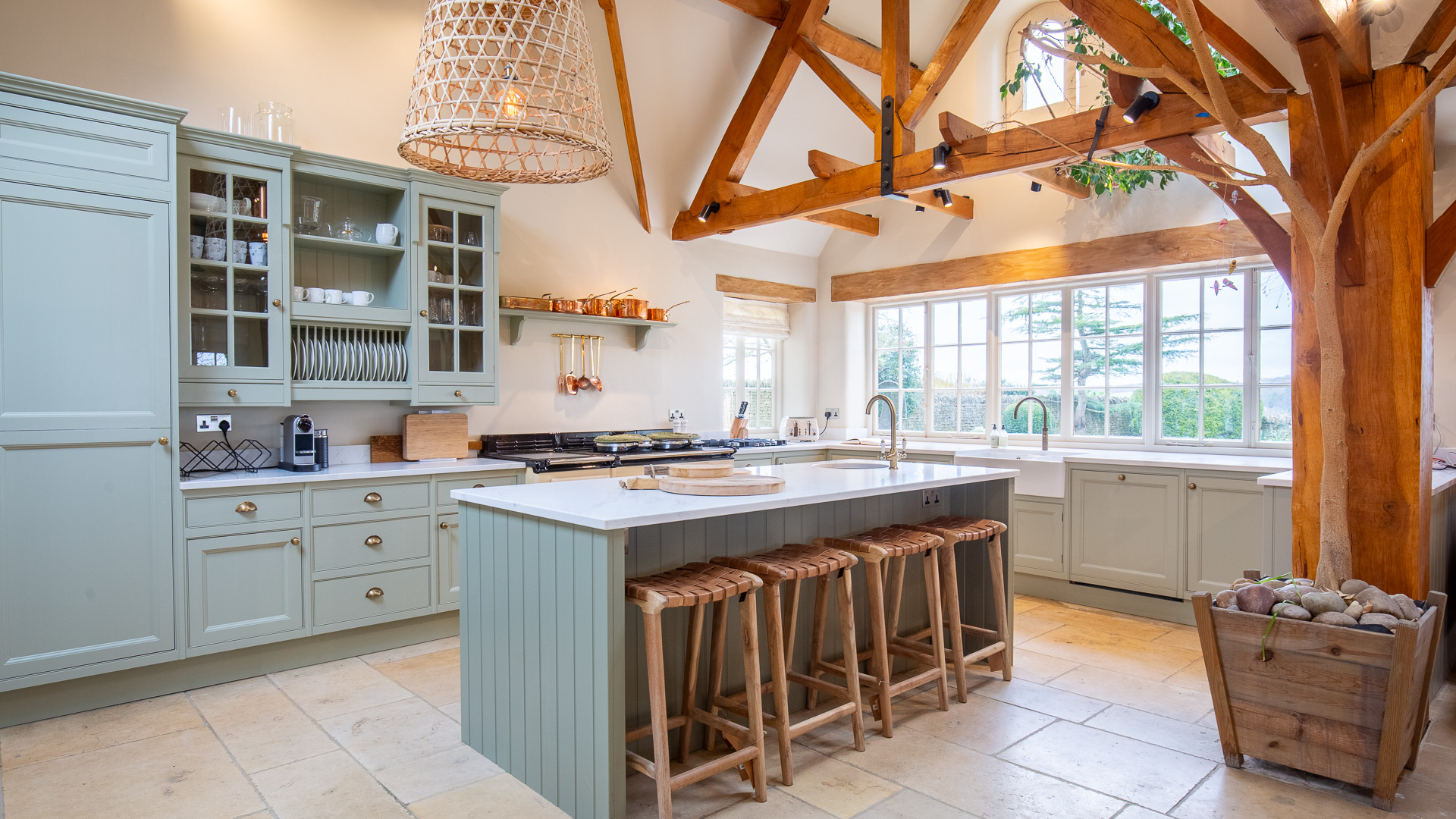
(Ashworth House, Charlbury, Bolthole Retreats)
Passing the 140/70 test starts with bookings, and that’s where Bolthole Retreats are here to help you. We market your home, manage your calendar and keep the booking records you need to show it’s a genuine letting business. If you need specialist advice on business rates or council tax, we’re happy to point you towards trusted experts.
Thinking about letting your property? Call our Owners Team for a friendly chat on +44 (0)1242 851208 or email us at [email protected]. There’s no obligation, and we’d love to talk through what your home could earn.
This article is general information as of November 2026 and isn’t tax or legal advice. Rules differ in Wales. Please take professional advice for your own circumstances.
Sources
- GOV.UK, Letting out a self-catering holiday home in England: rules and regulations
- GOV.UK, Budget 2026
- HMRC, property income tax rates
- MHCLG, business rates letter 8/2026
- Setfords
- UK Property Accountants